
The full name of the Russian Olympic Committee could not be used and team flags would bear the logo of the committee

A summary of major figures and facts at the Tokyo Games.

Asked about the campaign against the Games, Tokyo Governor Yuriko Koike said she would work towards a "safe and secure" Olympics.

The Sapporo Challenge Half Marathon 2021 was held on Wednesday as a dress rehearsal for the marquee Olympic event

The rearranged Tokyo Games must be held "at any cost" in 2021, Japan's Olympic Minister Seiko Hashimoto said on Tuesday.
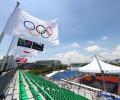
The athlete, who has tested positive most recently was not staying at the Games village.

Plans that had been almost a decade in the making were shredded as the COVID-19 pandemic forced the IOC and Japanese government to take the unprecedented decision to postpone the Olympics for a year.

Athletes will need to provide a negative COVID-19 test taken less than 72 hours before arriving in Japan for the Olympics and will be tested "every 96-120 hours" during the Games, according to a report published by organisers.

The head of the World Squash Federation (WSF) said he was devastated for the sport's millions of followers after squash was again overlooked for the 2020 Tokyo Olympics.

Tokyo 2020 organising committee is not considering postponing or cancelling the 2020 Games despite the spread of coronavirus.

Senior international Olympics official John Coates said on Saturday the delayed Tokyo Olympics could end up being the greatest Games ever, coming next year as the world emerges from COVID-19 crisis. Coates, Australia's Olympic chief and head of the International Olympic Committee's inspectorate for the Games, cited the examples of positive Summer Games that followed the two world wars of the 20th century. The Tokyo Games were postponed for a year to 2021 in the aftermath of the new coronavirus outbreak.

The Paralympic Committee of India (PCI) has terminated the services of coach Naval Singh after Paralympic gold medallist Sumit Antil accused him of mental harassment and verbal abuse.

Due to the delay the Beijing Games will now start just over six months after Tokyo.

Tokyo's state of emergency, the capital's fourth, lasts until Aug. 22, shortly before the Paralympics begin.

Australian swimming great Ian Thorpe says athletes should not put their Olympic dreams before their health in deciding whether to compete at the Tokyo Games as global health authorities battle to contain the spread of the new coronavirus. A number of international sports events have been hit by the coronavirus, with some competitions being postponed and others cancelled outright, and there are concerns that the outbreak might scupper the Tokyo Olympics.

Tokyo's Olympic 2020 contract allows it to postpone the Games until the end of the year, Japan's Olympics minister said on Tuesday, amid concern the coronavirus could disrupt the event. To curb the coronavirus, Japan's government has asked schools to close and encouraged the curtailment of events, including sports meetings, that could attract large crowds.

Tokyo officials have said they intend to put on the Games in 2021 even if the pandemic has not eased substantially.

Here's what you need to know about the Tokyo Games
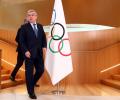
The International Olympic Committee (IOC) on Tuesday gave further unequivocal backing to this summer's Tokyo Olympics, urging athletes to prepare "full steam" despite the coronavirus threat. Multiple sports events around the world have been cancelled during the epidemic, which has killed more than 3,000 people in China and spread to more than 60 nations including Japan where infections are near 1,000 and 12 people have died.

The Tokyo Olympics had originally been scheduled for 2020 but were postponed by a year because of the pandemic.

The postponed Olympic Games will now begin on July 23 next year and run until August 8, the head of the Tokyo 2020 organising committee said on Monday, as the coronavirus pandemic made it impossible to plan and prepare for them properly this year. The Games were postponed last week - the first such delay in the 124-year history of the modern Olympics. The move was a huge blow for Japan, which invested $13 billion in the run-up to the event and raised $3 billion from domestic sponsors.

Japanese Prime Minister Shinzo Abe said on Monday that the government will keep in close touch with all relevant groups to ensure a virus outbreak does not have affect the Summer Olympics. Olympics Minister Seiko Hashimoto said organisers are not considering cancelling the Olympics, which start on July 24.

The Tokyo Olympics next July will be a "uniquely risky" event, demanding flexibility from organisers amid the uncertainty of the coronavirus pandemic, particularly if a vaccine has not been rolled out by then, medical experts say. Japan and the International Olympic Committee made the unprecedented decision last month to delay the Games for a year, as the world battles the virus that has infected 2.3 million people and killed more than 150,000 globally. But questions persist whether the Games can go ahead 15 months from now, as a vaccine could still be at least a year away, according to the most optimistic estimates.

India's shooting legend Abhinav Bindra believes the International Olympic Committee was "prompt" in postponing the Tokyo Olympic Games, even as some other top athletes and national associations slammed the IOC for "delaying" the announcement. In an unprecedented move, the 2020 Tokyo Games was on Tuesday pushed to next year due to the COVID-19 pandemic that has wreaked havoc on the world.
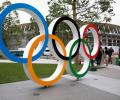
Tokyo has mostly delivered on that hope, despite some early teething problems.

Indian athletes, including the boxers and shooters, hit the ground running as they started their pre-Olympic training, hoping to live up to massive expectations in the pandemic-hit Games in Tokyo.

Little-known retired swimmer Naoko Imoto will be a last-minute stand-in to receive the Olympic flame during a scaled back handover in Athens on Thursday, Tokyo 2020 organisers said. The Tokyo 2020 team had contacted Imoto, who lives in Greece, only hours before making the announcement on Wednesday evening in the Japanese capital.

The International Olympic Committee (IOC) should review plans to go ahead with the Tokyo Olympics during the coronavirus pandemic and ensure dialogue with athletes, the Sport and Rights Alliance (SRA) and the World Players Association (WPA) said on Saturday.

Images from the opening ceremony of the Tokyo Olympics, at the National Stadium, on Friday.

Organisers should be prepared to act swiftly to ban spectators or declare another state of emergency if needed, the experts said. If spectators are allowed, rules should be strict, such as limiting fans to local residents, the experts said.

Games likely to open in July 2021 according to Japanese media

The four-month event has been hit by several high-profile runner cancellations as celebrities have pulled out, citing late notice and worries about drawing crowds during the pandemic.
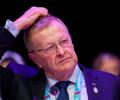
Nearly 80% of the Japanese public are now opposed to holding the Summer Games as scheduled this year, recent polls show.

Several countries, including Israel and Denmark, said they would vaccinate their athletes and staff against COVID-19 ahead of the Tokyo Olympics, amid global debate over whether athletes should be given priority access in the rollout.

The Tokyo 2020 Olympics torch-lighting ceremony in ancient Olympia this week will be staged without spectators as organisers protect the event from the coronavirus, Greece's Olympic Committee said on Monday. The Olympic torch will be lit in Olympia at a scaled-down ceremony on March 12 before a seven-day relay that will culminate with a handover ceremony in Greece on March 19.

International Olympic Committee (IOC) chief Thomas Bach says the Tokyo Games would have to be scrapped if the event cannot be held next year due to the COVID-19 crisis. In March, the IOC and Japanese government took the unprecedented decision to delay the Games, which had been due to start in July, for a year due to the novel coronavirus outbreak.
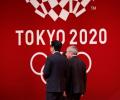
Japanese Prime Minister Shinzo Abe said for the first time on Monday that the Tokyo Olympic Games may need to be postponed if the event cannot be held in its 'complete form' due to the coronavirus pandemic. Abe said that while cancelling the Games was not an option, a delay was now on the cards if that was the only way to hold the event in its complete form.

The International Olympic Committee expects to bear costs of up to $800 million for its part in the organisation of the postponed Tokyo 2020 Olympics, now due to be staged next year, IOC president Thomas Bach said on Thursday. In March, the International Olympic Committee and the Japanese government decided to delay the Games, which were due to start this July, for a year because of the coronavirus pandemic that has killed 300,000 people worldwide.
The International Olympic Committee has been advised by the World Health Organization that there is no case for contingency plans to cancel or relocate the Tokyo 2020 Olympics over the coronavirus outbreak, the IOC's Coordination Commission head said on Friday.
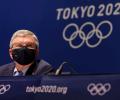
'This also weighed on us, it weighed on me. But in order to arrive at this day today we had to give confidence, had to show a way out of this crisis'.
 © 2026 Rediff.com - Advertise with us - Disclaimer - Privacy Policy - Sitemap - Feedback - About us - Terms of use - Grievances